I was at Cedarcrypt as a speaker, and it was one of the most valuable experiences I’ve ever had.
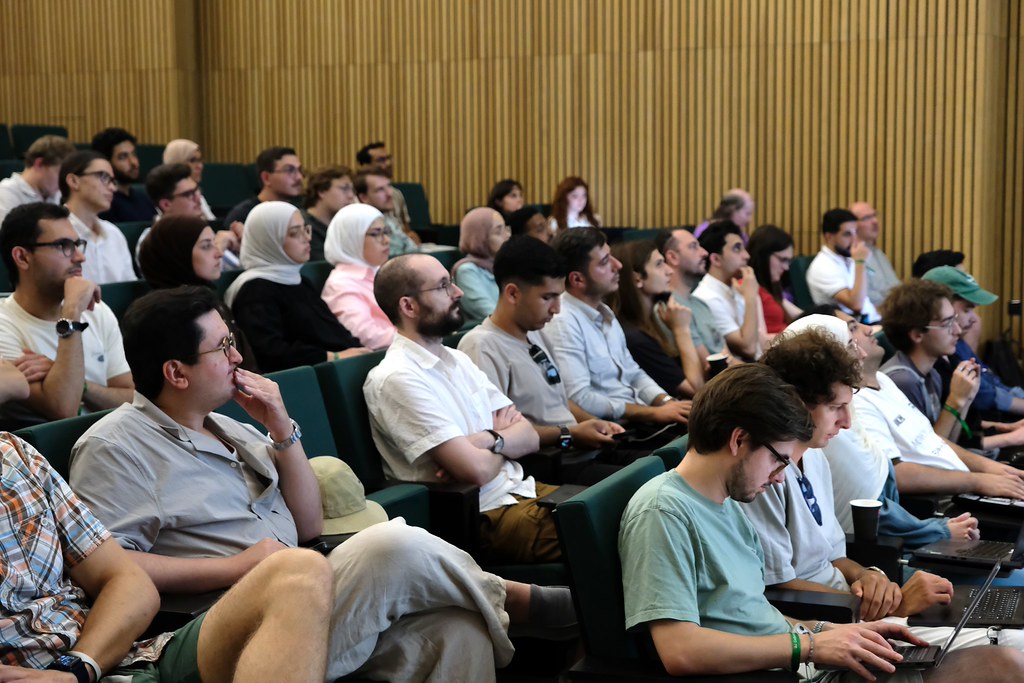
There were two types of attendees. On one side, researchers and experts, who delivered talks, workshops, and valuable insights from their fields. On the other side, there were committed students who well received the sessions, engaged in discussions, got inspired, and aspire to be the ones on stage next time.
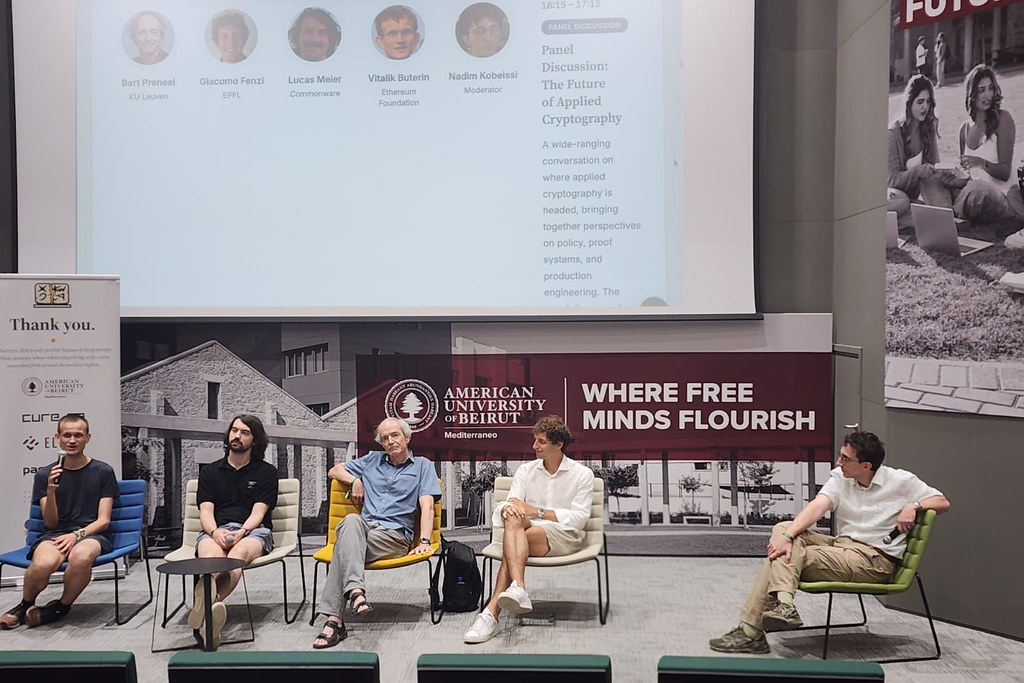
My role there was to deliver a 3-hour workshop on how zk-SNARKs work. So I probably fell into the first category, the experts. In all honesty though, I am probably no more an expert than many of the students who were in that hall. In fact, until only a few weeks before the event, I didn’t really know how zk-SNARKs work. I had given a higher-level version of this material before, and I had been comfortable leaving the details in a black box. My initial intention was to stick to more or less that same level.
But I know that so much of cryptography is too beautiful to leave concealed. It really excites me whenever I can show others this beauty, and to see it, you have to understand it. Preparing for Cedarcrypt’s audience is what finally made me open that box.
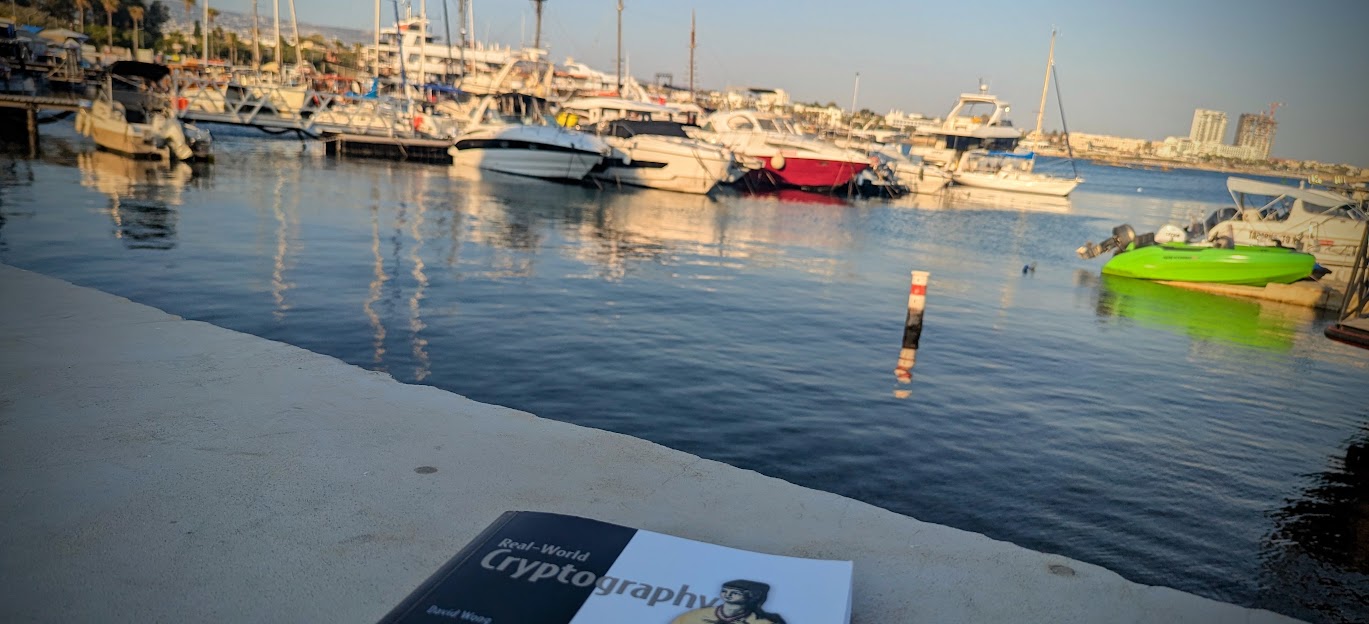
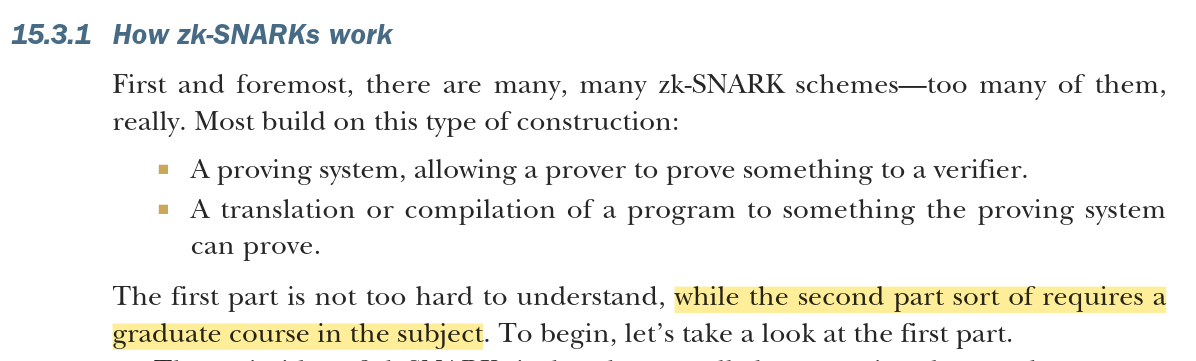
And this is really most of what I want to say to the students who attended. A lot of the obstacles associated with cryptography are complex notation, large scary disclaimers, or unfair assumptions about your background knowledge (also gatekeeper wannabes). This statement in the Real-World Cryptography book (the same book I took with me to Paphos) has psychologically intimidated me for months, although I am sure it means well:
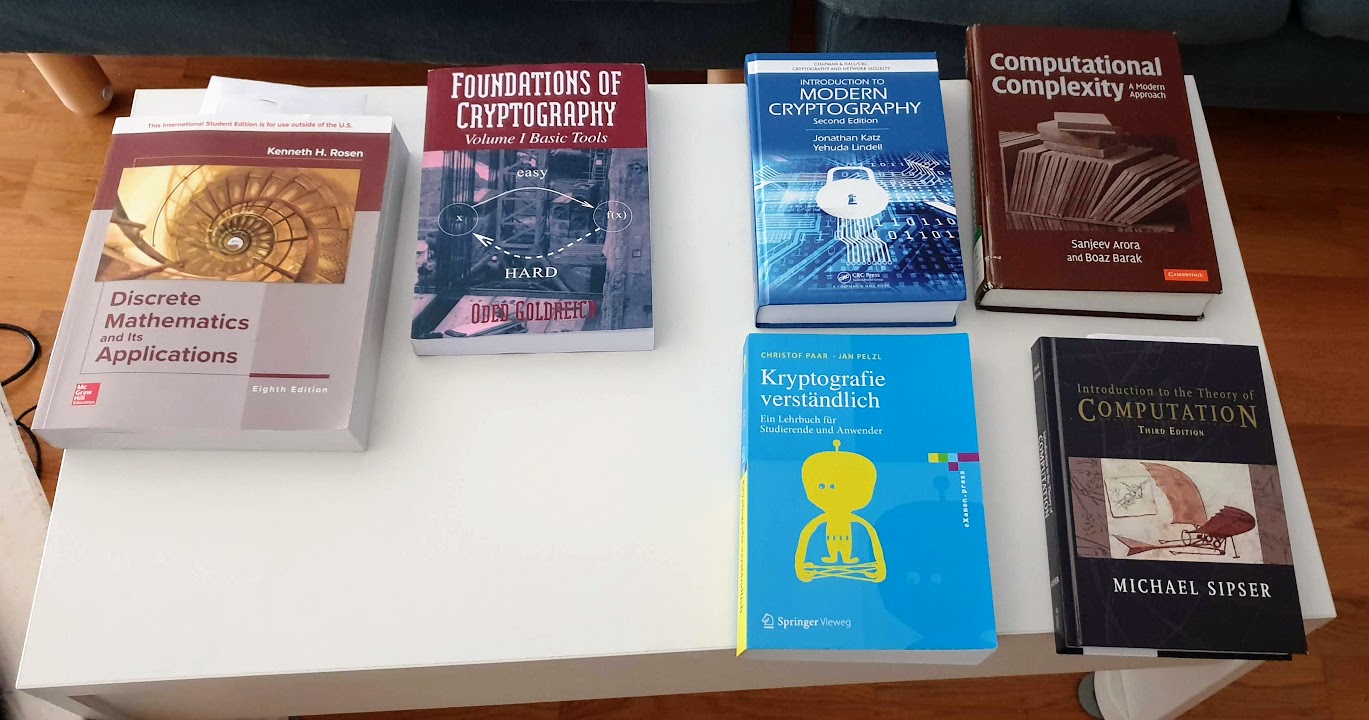
And the unfair assumptions about one’s background, in particular, have caused me a lot of anxiety and struggle during my studies. I took the photo below after completing one “self contained” cryptography course while studying for my master’s degree in 2020. I am super glad we now have LLMs that can act as personal tutors, ones you can ask stupid questions without judgement.
But Really Why Learn How SNARKs Work?
I was very fortunate to have been first introduced to SNARKs and their toolkits while working in the very same group from which ZoKrates came out. Having been mostly accustomed to ZKPs of algebraic relations, the ability to generate zero knowledge proofs out of ordinary looking programs just felt magical.
However, it doesn’t take long experimenting and playing with different ideas that sound good on paper till you hit the wall of proving costs. In ToT, proving validity of 27 EdDSA signatures needed 26 GB of RAM and almost 5 minutes to complete. And so, you come to realize the reality that many cool-sounding applications are frustratingly unattainable on common hardware under these limitations.
But then you find something like VerITAS. It enables proving edits to signed photos, when hashing such data in a proof is normally infeasibly complex. The trick is by employing polynomial commitments. Dan Boneh (also co-author of the paper) reiterated the significance of this in ZK Podcast 345 (00:53:03):
We’re going to treat the image as basically 60 million pixels. We’re going to treat them as coefficients of a polynomial. We’re going to commit to that polynomial. The commitment is going to be very short. And then the camera will just sign that commitment. […] It turns out now the ZK proof just has to prove image manipulation. It doesn’t prove anything about the signature.
But for the love of god, both instances where I read/heard about this trick, it did not make sense to me nor could I figure out how to make use of it. That’s expected, though, given how much ZK toolkits confine SNARKS in black boxes one could use without much understanding. And this particular trick has no expression at that layer at all. It’s only when I finally bit the bullet and committed to opening that black box, and understood the role polynomial (homomorphic) commitments play in SNARKs constructions that everything came together and made sense.
I sincerely hope the workshop has given the students a sufficient glimpse into what makes SNARKs possible, or at the very least, turned them in their minds from the intimidating black box they might have been into something accessible. In my experience, once you have opened one such box, you finally come to internalize that the obstacles in getting into cryptography subjects are much smaller than they look from the outside. Don’t get me wrong, some are indeed real and require a lot of work to overcome. But, IMO, the biggest impact of Cedarcrypt is proving to yourself that you are capable of overcoming them. Perhaps you now see a path that was not visible before, and once you do, everything becomes possible.
And I am very much looking forward to next editions of Cedarcrypt, especially the ones where today’s students are the ones on stage. I hope to be able to participate and contribute to the event again, and I will continue to advocate for people in my circle to propose topics and take part themselves. The “real-world” impact here is indeed real.